
The Security Advance
The Security Advance:
How Executive Protection Agents Keep You Safe Before You Arrive
When most people think of executive protection or bodyguard work, they imagine agents standing next to a client, scanning the crowd. In reality, some of the most critical work happens long before the client even arrives. That work is called **the advance**—a structured security survey of the entire travel itinerary.
A good advance turns an unpredictable day into a controlled, manageable operation. It reduces surprises, speeds up decision-making, and keeps the principal, the team, and bystanders safer.
What Is an Advance?
In simple terms, an advance is a security survey of everything on the schedule. That usually includes:
- Hotels
- Airports
- Restaurants and cafes
- Vehicles and parking areas
- Entertainment venues (concerts, clubs, theaters, stadiums)
- Filming sets or production locations
- Residences and private properties
- Places of worship
- Routes in between
- Medical resources (hospitals, urgent care, EMS, fire)
The purpose isn’t just to “look around.” A proper advance:
- Identifies threats, vulnerabilities, and chokepoints
- Confirms logistical details (timing, access points, parking, routes)
- Establishes primary and alternate plans
- Builds relationships with on-site staff and security
- Maps out medical contingencies and emergency options
By the time the principal arrives, the team should already know where they’re going, how they’re getting there, where they’re standing, sitting, parking, and exiting—and what to do when something goes wrong.
Electronic vs. Physical Advance
Modern protection details almost always start with an **electronic advance** before they ever send someone on the ground. Then, if time and manpower allow, they conduct a **physical advance** at key locations.
Electronic Advance: An electronic advance uses tools and information you can access without being physically present:
- Online maps and satellite images
- Street view and photos of the location and surrounding area
- Venue websites with floorplans, seating charts, and capacity info
- Open-source intelligence: news, crime stats, local issues
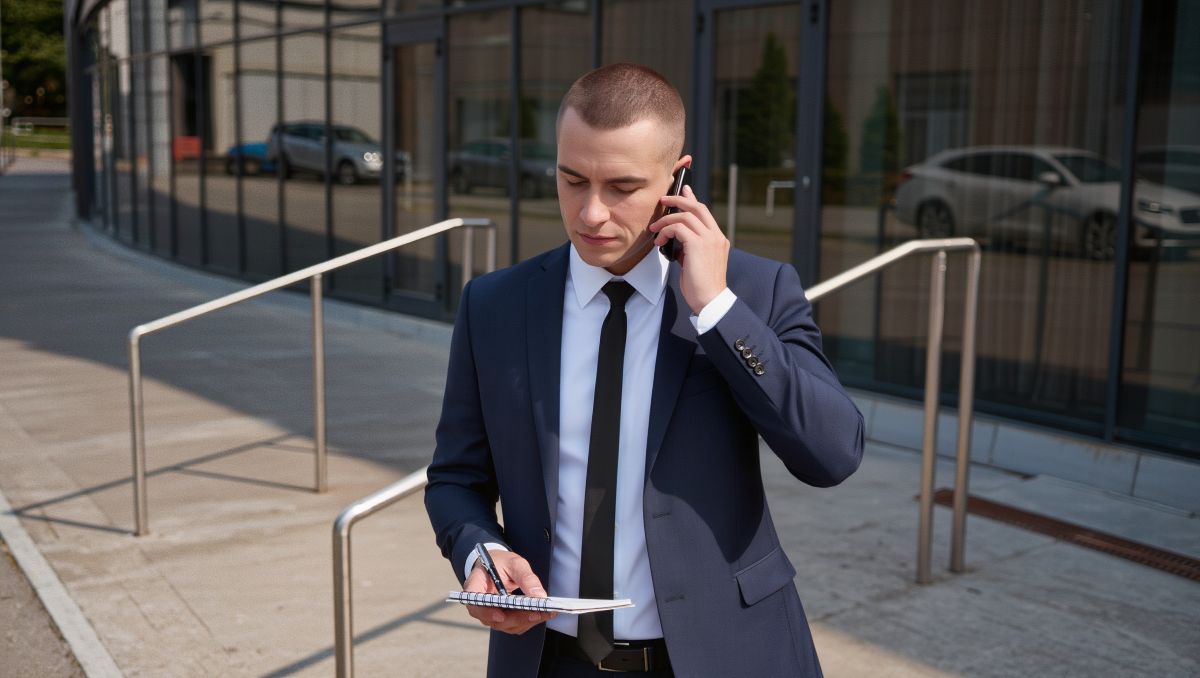
- Phone calls with staff, management, or event coordinators
From this, an agent can:
- Identify entrances and exits, loading docks, and service doors
- Understand surrounding streets, traffic patterns, and nearby landmarks
- Check where vehicles can stage or park (and where they can’t)
- Mark potential problem spots: bottlenecks, blind corners, exposed walkways
- Start building simple overlays or marked-up screenshots for the team
Electronic advances are efficient and can be done days in advance, but they have limits. Photos might be outdated, renovations may have changed layouts, and websites rarely show “back-of-house” pathways or service corridors.
Physical Advance: When possible, the team does a **physical advance**—a live visit to key locations ahead of the principal’s arrival. This is where details get confirmed or corrected. During a physical advance, agents can:
- Walk routes from curb to entrance, to table/seat/room, and back out
- Confirm where the vehicle will stage, wait, and depart
- Identify real-world chokepoints that don’t show up on a map
- Test access points: which doors are actually locked, who controls them, how they’re monitored
- Locate stairwells, elevators, fire exits, and emergency equipment
- Meet on-site security, managers, and relevant staff
The physical advance lets you cross-reference your electronic information with reality, catch problems early, and build rapport with the people who can help you if something goes wrong.
Key Locations in an Advance
Hotels
Hotels are common operating bases, and they involve many moving parts. A hotel advance should look at:
**Arrival and departure points:**
- Where does the vehicle pull in?
- Is there a covered entrance, side entrance, or private entrance?
- How exposed is the walk from the vehicle to the lobby?
**Lobby layout and routes:**
- What paths from the entrance to elevators are shortest, safest, and least exposed?
- Where are the obvious bottlenecks in case the lobby fills up?
**Guest room location:**
- Which floor is best from a security and evacuation perspective?
- How far is the room from elevators and stairwells?
- Are there connecting doors to other rooms, and can they be secured?
**Ballrooms and meeting rooms:**
- Where are they located relative to entrances and elevators?
- What are the access points (main doors, service doors, backstage)?
- Where are emergency exits and safe egress routes if the room needs to be cleared quickly?
**Amenities:**
- Restaurants, bars, pool areas, spa, fitness center, and salon
- How traffic flows through those spaces and whether the client is likely to be recognized or crowded
The goal is to understand how the client moves through the property and how quickly the team can move them out if needed.
Airports
Airports can be relatively controlled—but also high-consequence, high-visibility environments. Key points in an airport advance:
**Pickup and drop-off areas:**
- Where does the vehicle stage?
- Are there designated VIP or commercial lanes?
- How exposed is the client while loading/unloading?
- Is there a greeter?
**Inside the terminal:**
- Which entrances do we use?
- Where are security checkpoints and potential choke points?
- Are there alternate routes if a particular area is blocked or crowded?
**Private or charter flights:**
- Location of FBO (fixed-base operator)
- Access routes for vehicles
- Where passengers embark and disembark
- Tail number of the aircraft, so the team can track arrival and departure and adjust timing in real time
Knowing the tail number and FBO procedures enables the team to determine when the plane is inbound, delayed, or diverted, rather than relying on secondhand updates.
Restaurants
Restaurants are deceptively complex from a protection standpoint. They combine public access, tight layouts, and limited exits. During the advance, agents focus on:
- How the client will approach from the vehicle
- Which door they’ll use for entry and exit
- Where the table will be and what the **line of sight** is like
- Which seats give the client the best position (back to a wall, view of primary entrance, close to an exit)
- The general noise level and crowd density
The team also wants a secure route to the table and back—not just “They’re reserved under this name at 7 pm.” They need to know how to get the principal in and out quickly with minimal exposure if things change suddenly.
Entertainment Venues and Events
Whether the client is attending or performing, the advance will look different—but the priorities stay the same:
- Safe arrival and departure routes
- Controlled access to backstage, green rooms, VIP areas, or boxes
- Seat locations relative to aisles, exits, and crowd flow
- Coordination with venue security and staff
- Escape routes if there’s a disturbance, medical emergency, or threat
Large venues add complexity: crowd pressure, narrow aisles, limited exits, and long distances between parking and seating. The advance is when those issues are resolved on paper before they become real problems in front of thousands of people.
Residences, Filming Sets, and Places of Worship
Beyond the usual hotels and restaurants, advances often include more specialized locations:
**Residences:**
- Neighborhood layout and approaches
- Parking options and garage access
- Fences, gates, camera coverage, lighting, and blind spots
**Filming sets and production locations:**
- Who controls the set and access points
- Where crew, extras, and public have access
- Where the client can stage, wait, and move between scenes without unnecessary exposure
**Places of worship:**
- Entry/exit routes that respect the environment and culture
- Seating plans that balance security with discretion
- Crowds during services and events
Each type of site has its own rhythm and norms, and a professional advance respects that while still prioritizing safety.
Sweeping Rooms: Building a Process
Part of a thorough advance is sweeping rooms —checking for suspicious devices or anything that could compromise privacy or safety. This isn’t about paranoia; it’s about having a deliberate process instead of just “looking around.” A solid sweep usually includes:
**Establishing a baseline**
- Understand what the room *should* look like in that environment.
- Hotels, for example, are often standardized. That makes anything out of place more obvious.
**Systematic search pattern**
- Choose a direction (clockwise or counterclockwise) and stick with it.
- Work from one point of the room around the perimeter, then move inward.
- Don’t jump randomly; that’s how things get missed.
**Looking for anomalies and duplicates**
- Extra or odd devices (out-of-place smoke detector, weirdly placed power strip, duplicate clock/radio, an extra “charger” or adapter that doesn’t make sense)
- Items that look like they’ve been recently tampered with, moved, or installed
**Lines of sight to sensitive areas**
- Bathrooms, sleeping areas, workspaces, and shared spaces—all places someone would want to observe or listen in on
- Vents, mirrors, picture frames, electronics, and other natural concealment locations
Depending on the level of risk, teams may use both physical inspection and technical tools (such as RF detectors) to identify active devices. Still, process and attention to detail are always the foundation.
Medical and Emergency Considerations
No advance is complete without medical planning. Even if there’s no specific threat, the team needs to be ready for accidents, sudden illness, or environmental issues. That includes:
- Identifying the nearest appropriate medical facility (not just any hospital, but the closest one capable of handling trauma or serious emergencies)
- Knowing routes and average travel times under normal conditions
- Knowing where the nearest fire station is and how to contact local emergency services quickly
- Considering local EMS response times and capabilities
When seconds matter, you don’t want to be searching your phone for “hospital near me.” That work should already be done in the advance.
Why the Advance Separates Amateurs from Professionals
Anyone can stand next to a client and look alert. What separates true professionals is what they do **before** the client arrives:
- They’ve walked the route.
- They’ve seen the exits.
- They’ve tested the path from vehicle to lobby to elevator to room.
- They’ve spoken with managers and security.
- They know where the nearest trauma center is.
- They’ve planned a Plan B—and a Plan C.
The advance is where risk is reduced, confusion is eliminated, and the team gains control over the environment. By the time the principal steps out of the vehicle, the day should already be rehearsed on the protection side—even if nobody else notices.